Water Damage Pros Washington logo Water Damage Pros Washington
Get Estimate

Emergency Water Removal in Washington

24/7 crews pumping, drying, and saving Washington homes


Emergency Water Removal in Washington means a crew on your doorstep fast - extracting standing water, drying the structure, and stopping mold before it starts. Whether a frozen pipe burst in Spokane at 2 a.m. or a storm pushed water into a Bellingham basement, our IICRC-certified technicians handle urgent water extraction Washington families depend on. One call, and we roll.

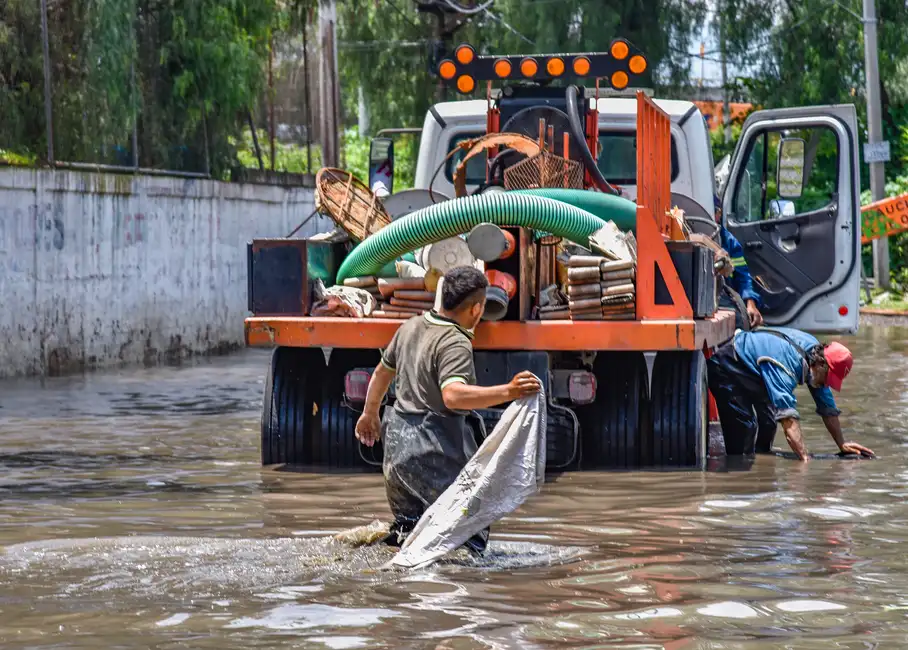
Workers wading through floodwaters near a truck, managing a city crisis after heavy rain.
Licensed Licensed & Bonded
Fully Insured Insured & Bonded
24/7 Emergency Same-Day Response
Warranty Backed Workmanship Guaranteed

What Our Emergency Water Removal Includes

Every job starts with a written scope so you know exactly what is covered. Standard emergency water removal includes source identification, extraction, drying equipment, daily monitoring, and a completion report. Add-ons like reconstruction, mold remediation, and content cleaning get quoted separately before we start.

Source Identification and Shutoff

We find where the water is coming from using a boroscope and thermal imaging camera, then shut off the supply if it is still running. You get a written scope of affected materials before equipment comes off the truck.
Truck-Mounted Water Extraction

Standing water gets pulled from carpet, pad, hardwood, and subfloor with commercial extraction units. Saturated carpet padding is cut out and hauled away. A typical 1,200-square-foot basement takes two to four hours.

Structural Drying Setup

We place Dri-Eaz and Phoenix air movers plus commercial dehumidifiers to dry walls, floors, and cavities. Equipment stays until moisture meter and hygrometer readings hit dry standard for your materials.

Antimicrobial Treatment

Affected framing, baseboards, and subfloor get treated with antimicrobial spray to stop mold growth. This is standard on every job, not an upsell. It is the difference between a dry house and a mold problem three weeks later.

Daily Monitoring and Documentation

A technician returns daily to log readings, adjust equipment, and photograph progress. You get a completion report with before-and-after moisture data that goes straight to your insurance adjuster.

What Emergency Water Removal in Washington Really Involves


Emergency Water Removal in Washington is the rapid extraction and structural drying of a building after a leak, burst pipe, sewage backup, or storm intrusion. It is not a shop vac and a box fan. We use truck-mounted water extraction units, Dri-Eaz and Phoenix Restoration Equipment air movers, and commercial dehumidifiers to pull hundreds of gallons out of carpet, pad, drywall, and subfloor - then we verify dryness with a moisture meter and thermal imaging camera before we call the job done.

Washington homes get hit from every direction: November rain that never stops, frozen copper pipes in Yakima and Pasco, slab leaks under 1970s construction, and crawl space moisture that quietly rots floor joists for months. When you search for emergency water removal Washington near me at 3 a.m., you need a crew that knows the difference between a Category 1 clean-water loss and a Category 3 sewage backup. We do, and we treat each one to ANSI/IICRC S500 standards.

Our Emergency Water Removal Process

From the first phone call to the final moisture reading, here is exactly what happens when you hire us for urgent water extraction in Washington.

01

Schedule

Call or book online — a real human picks up and confirms a 2-hour arrival window.

02

Diagnose

Licensed tech inspects on-site, then walks you through the cause and your options.

03

Fix

The job is completed to code and done right the first time — no shortcuts, no surprises.

04

Guarantee

Every job backed by a written workmanship warranty — and we stand behind it.

Tools and Methods We Use

Tools & Equipment

Truck-Mounted Water Extraction Unit

Pulls hundreds of gallons of standing water from carpet, pad, and hard floors faster than portable units. Essential for basements and large losses.

Dri-Eaz and Phoenix Air Movers

High-velocity air movers that evaporate moisture from walls, floors, and cavities. We position them based on a drying plan, not guesswork.

Commercial Dehumidifiers

Removes moisture from the air so wet materials can dry. We size units to the cubic footage of the affected space.

Thermal Imaging Camera

Maps the wet zone behind walls and under floors without cutting. Finds hidden water that a moisture meter alone would miss.

Moisture Meter and Hygrometer

Measures moisture content in materials and relative humidity in the air. We log readings daily to confirm the structure is drying to standard.

Boroscope

A camera on a flexible rod that lets us see inside wall cavities and under floors to find the leak source and check for hidden moisture.

Antimicrobial Spray

Applied to affected framing, baseboards, and subfloor to stop mold growth. Standard on every job, not an upsell.

Methods & Standards

ANSI/IICRC S500 Standard

The industry standard for water damage restoration. It defines water categories, drying goals, and documentation requirements. Every job we run follows S500 from extraction through final readings.

Daily Moisture Monitoring

We return every day to log moisture meter and hygrometer readings, adjust equipment placement, and photograph progress. Equipment stays until the structure hits dry standard.

Antimicrobial Treatment Protocol

After extraction and before drying, we apply antimicrobial spray to affected framing, baseboards, and subfloor. This stops mold colonization during the drying window.

Insurance Documentation Process

We photograph every affected room, log moisture readings, and produce a drying report your adjuster can use. Most homeowner policies cover sudden water damage, and our paperwork makes the claim straightforward.

When to Call for Emergency Water Removal

01

A water heater fails and floods the garage and adjacent room overnight.

What we do: We extract standing water, pull saturated carpet and pad, and set drying equipment. We also check the water heater pan and supply lines for the source.

→ Most garages and adjacent rooms dry in three to four days, and the insurance report is ready the same week.

02

A storm pushes water through a roof leak into the attic and ceiling.

What we do: We tarp the roof if needed, extract water from insulation and drywall, and dry the attic cavity with air movers. We document the roof damage for your claim.

→ The ceiling and attic dry without mold, and the repair scope is ready for your roofer and adjuster.

03

A washing machine supply line bursts while you are at work.

What we do: We shut off the supply, extract water from the laundry room and adjacent hallway, and dry the walls and floor. We check for water that migrated under baseboards.

→ The laundry room and hallway dry in three days, and the flooring is saved instead of replaced.

04

A sump pump fails during a November rainstorm and floods the basement.

What we do: We pump out standing water, extract from carpet and pad, and set commercial dehumidifiers. We also check the sump pump and recommend a backup system.

→ The basement dries in four to five days, and you get a written recommendation to prevent the next flood.

How Emergency Water Removal Works in Washington

Washington's climate creates water damage year-round. November through March brings relentless rain west of the Cascades, and freezing temperatures east of the mountains burst copper pipes in Spokane, Pasco, and Yakima. Summer thunderstorms dump water fast, and wildfire season can leave burn scars that channel debris flows into homes. Building stock matters too: pre-1978 homes in Bellingham and Sedro Woolley often have galvanized plumbing nearing the end of its life, while newer construction in Maple Valley and Bothell uses PEX that can fail at fittings. We know how Washington homes breathe, where water hides, and how to dry them without tearing a house apart unnecessarily. Our crews carry EPA Lead-Safe practices for older housing and follow ANSI/IICRC S500 on every job. If you need same day emergency water removal Washington-wide, call (855) 516-3683.

Neighborhoods We Serve

  • Ballard, Seattle

    Older homes with basements and galvanized plumbing are common here. We see a lot of slab leaks and failed supply lines in this neighborhood.

  • South Hill, Spokane

    Freeze-thaw cycles in winter burst pipes in unheated crawl spaces. We stage crews nearby for fast response.

  • Fairhaven, Bellingham

    Coastal rain and older housing stock mean crawl space moisture is a year-round issue. We dry and treat these spaces regularly.

  • Downtown Pasco

    Columbia Basin freeze events in winter cause pipe bursts in older commercial and residential buildings. We keep equipment ready.

Local Conditions We Plan For

  • Freeze-thaw cycles east of the Cascades

    Pipes in unheated crawl spaces and exterior walls burst when temperatures drop below 20°F. We see a spike in calls from Spokane, Pasco, and Yakima from December through February.

  • Heavy winter rain west of the Cascades

    Saturated ground and clogged drains push water into basements and crawl spaces. Bellingham, Sedro Woolley, and Tukwila see the most calls from November through March.

  • Aging plumbing in pre-1978 homes

    Galvanized and early copper pipes fail at fittings and joints. We use EPA Lead-Safe practices when working in these homes to protect occupants.

  • Summer storm water intrusion

    Fast, heavy rain overwhelms gutters and foundation drains, pushing water into homes. We respond quickly to extract and dry before mold takes hold.

Burst Pipe in Spokane Basement

Before

A supply line burst in an unfinished Spokane basement overnight, leaving two inches of standing water across 800 square feet. Carpet and pad were saturated, and water had wicked up the drywall six inches.

After

We extracted the water in three hours, cut out saturated drywall and pad, and set drying equipment. Five days later, moisture readings hit dry standard. The homeowner avoided mold and saved the finished portion of the basement.

Maintenance: We recommended insulating the supply line and adding a water leak sensor near the water heater. Both are inexpensive and prevent the next burst.

Before

A week of heavy rain flooded a Bellingham crawl space with four inches of water. Floor joists were wet, and early mold growth was visible on the subfloor above.

After

We pumped out the water, treated the joists with antimicrobial spray, and dried the space with commercial dehumidifiers. Six days later, moisture readings were normal. The mold did not spread.

Maintenance: We recommended a sump pump with a battery backup and improved grading around the foundation. The homeowner has not had a flood since.

Before

A sewage line backed up into two ground-floor units of a Tukwila duplex, contaminating 600 square feet of flooring and lower drywall. The landlord needed it handled fast to keep tenants housed.

After

We extracted the water, removed contaminated materials, and sanitized every affected surface to ANSI/IICRC S500 standards. Four days later, both units were dry and ready for rebuild. Insurance approved the claim without questions.

Maintenance: We recommended a backwater valve on the main line to prevent future backups. The landlord installed one within the month.

Water Problems We Solve Across Washington

Water damage comes in many forms, and each one needs a different approach. Here are the most common calls we get from Washington homeowners and how we handle them.

Problem

Frozen pipe burst in winter

A single burst copper pipe can dump 250 gallons an hour into walls and floors, saturating drywall, insulation, and subfloor before you notice.

Our Fix

We shut off the supply, extract standing water, cut out saturated drywall and insulation, and dry the cavity with air movers and dehumidifiers. Most jobs dry in three to five days.

Problem

Sewage backup in basement

Sewage is Category 3 water - hazardous and requiring full disinfection. Ignoring it risks serious health issues and structural rot.

Our Fix

Our crews extract the water, remove contaminated materials, and sanitize every affected surface to ANSI/IICRC S500 standards. We document everything for your insurance claim.

Problem

Crawl space flooding after heavy rain

Standing water in a crawl space rots floor joists, feeds mold, and can undermine your foundation over months.

Our Fix

We pump out standing water, dry the space with commercial dehumidifiers, and treat framing with antimicrobial spray. We also check for sump pump failures and drainage issues.

Problem

Slab leak under flooring

A slab leak soaks carpet and hardwood from below, often going unnoticed until the floor buckles or the water bill spikes.

Our Fix

We locate the leak with thermal imaging, extract water from affected flooring, dry the slab and subfloor, and coordinate with a plumber to repair the line.

Why Washington Homeowners Call Us First

Why Washington Homeowners Call Us First

Water damage gets worse by the hour. Mold can start colonizing wet drywall in 24 to 48 hours, and every hour of standing water adds thousands to the repair bill. Here is what you get when you call us instead of waiting until morning.

  • Fast Response, Day or Night

    Our crews run 24/7 emergency water removal Washington dispatch, including holidays. A burst pipe at 2 a.m. in Spokane or a flooded basement in Tukwila gets the same priority as a 2 p.m. call. We stage equipment before we arrive so extraction starts the moment we walk in.

  • Insurance-Ready Documentation

    We photograph every affected room, log moisture readings, and produce a drying report your adjuster can use. Most homeowner policies cover sudden water damage, and our paperwork makes the claim straightforward. You get a copy of everything we send your carrier.

  • Mold Prevention Built In

    Extraction is only half the job. We apply antimicrobial spray to affected framing, set air movers and dehumidifiers to dry the cavity, and monitor with a hygrometer until readings match a dry standard. That is how you avoid a mold remediation bill three weeks later.

  • Certified Technicians on Every Job

    Every lead tech holds IICRC WRT and ASD credentials, with AMRT on staff for jobs that already show mold growth. We follow ANSI/IICRC S500 and pull Washington State Contractor License verification on every project. No subs, no shortcuts.

Emergency Water Removal Pricing in Washington

Typical 2026 pricing in Washington runs $500 to $1,500 for a small residential extraction and $2,500 to $7,000 for a full basement or crawl space dry-out. Cost depends on water category, square footage, how long the water sat, and whether materials need removal. We give you a written scope and price before we start, and we bill insurance directly when your carrier allows it.

Typical Investment Range

$500 - $7,000 depending on scope

Fast extraction and proper drying cost far less than mold remediation and structural repair. Our written scope means no surprises, and our documentation helps your insurance claim get approved the first time.

What changes the price

01

Water Category

Category 1 clean water costs less to remediate than Category 2 gray water or Category 3 sewage. Sewage backups require full disinfection and removal of contaminated materials, which adds labor and disposal costs.

02

Square Footage Affected

A 200-square-foot bathroom costs far less than a 1,200-square-foot basement. We measure the affected area during inspection and price based on actual square footage, not a flat rate.

03

Time Since Intrusion

Water that sat for 48 hours or more has likely wicked into walls and subfloor, requiring more extensive drying and possibly mold treatment. Fast response keeps costs down.

04

Material Removal Needed

Saturated carpet padding, drywall, and insulation often need to be cut out and hauled away. The more materials removed, the higher the disposal and labor cost.

05

Drying Time Required

Most jobs dry in three to five days. Dense materials like hardwood and plaster can take longer, extending equipment rental and monitoring visits.

Licensed, Certified, and Insured

Licensed & Certified

  • IICRC WRT (Water Restoration Technician) — issued by Institute of Inspection, Cleaning and Restoration Certification
  • IICRC ASD (Applied Structural Drying) — issued by Institute of Inspection, Cleaning and Restoration Certification
  • IICRC AMRT (Applied Microbial Remediation Technician) — issued by Institute of Inspection, Cleaning and Restoration Certification
  • EPA Lead-Safe Certified — issued by U.S. Environmental Protection Agency
  • Washington State Contractor License — issued by Washington State Department of Labor & Industries

Verified Reviews

Google ★★★★★4.9

Called at 11 p.m. after our water heater let go. A technician was here in under an hour. He extracted the water, set up fans and a dehumidifier, and explained everything. The price matched the quote exactly. Highly recommend.

Yelp ★★★★★4.8

Our crawl space flooded after a week of rain. The crew pumped it out, treated the joists, and dried the whole space. They showed me moisture readings before and after. Professional and thorough.

BBB ★★★★★4.9

Sewage backup in our duplex. These guys handled it fast and documented everything for insurance. Both units were dry and ready for rebuild in four days. Could not have asked for a better outcome.

Water Damage Expertise You Can Verify

Our technicians train to IICRC standards and carry WRT, ASD, and AMRT certifications. We work with EPA Lead-Safe practices on pre-1978 homes common across Washington, and every crew member holds OSHA 10. We have extracted water from crawl spaces in Bellingham, slab leaks in Pasco, and sewage backups in Fife. We know how Washington construction breathes, where water hides, and how to dry it without tearing a house apart unnecessarily.

  • IICRC WRT and ASD certified on every lead technician
  • AMRT-certified staff for jobs with existing mold growth
  • EPA Lead-Safe practices on pre-1978 Washington housing stock
  • OSHA 10 trained crews on every dispatch
  • Washington State Contractor License verified and bonded
Get Started Today
Water Damage Expertise You Can Verify

Cities We Serve for Emergency Water Removal

We deliver urgent water extraction Washington-wide, from the Puget Sound to the Columbia Basin and the Palouse. Crews stage across the state so we can reach most addresses fast. Whether you are in a 1920s Craftsman in Bothell or a newer build in Maple Valley, we know the local building stock and how water moves through it.

Spokane

Freeze-thaw cycles burst pipes in Spokane crawl spaces and exterior walls every winter. We stage crews nearby and respond fast to extract, dry, and prevent mold.

Bellingham

Coastal rain and older housing stock make crawl space moisture a year-round issue in Bellingham. We pump out standing water, dry the space, and treat framing.

Pasco

Columbia Basin freeze events cause pipe bursts in Pasco homes and businesses. Our crews carry extraction and drying equipment ready for fast response.

Bothell

Bothell's mix of older and newer homes means we see both galvanized pipe failures and PEX fitting leaks. We handle extraction, drying, and insurance documentation.

Maple Valley

Maple Valley's newer construction can still flood from appliance failures and storm water intrusion. We extract, dry, and document for your insurance claim.

Tukwila

Tukwila's commercial and residential buildings see sewage backups and storm water intrusion. We handle Category 3 cleanup and full disinfection to S500 standards.

Washougal

Washougal homes near the Columbia River face storm water intrusion and basement flooding. We extract, dry, and restore quickly to prevent mold.

Sedro Woolley

Sedro Woolley's older housing stock has galvanized plumbing nearing end of life. We use EPA Lead-Safe practices when extracting and drying in these homes.

Fife

Fife's industrial and residential properties see pipe bursts and sewage backups. We respond 24/7 with truck-mounted extraction and commercial drying equipment.

Barberton

Barberton's rural properties often rely on well systems and septic. We handle water extraction and drying for both, with documentation for insurance.

Hobart

Hobart's wooded lots and older homes see roof leaks and crawl space moisture. We extract, dry, and treat framing to stop mold before it starts.

Otis Orchards

Otis Orchards' freeze-thaw winters burst pipes in unheated spaces. We stage crews nearby and respond fast to extract and dry before mold takes hold.

Wapato

Wapato's agricultural setting means irrigation leaks and storm water intrusion. We extract standing water, dry the structure, and document for your claim.

Indianola

Indianola's coastal location brings heavy rain and high humidity. We handle crawl space flooding and basement water removal with commercial drying equipment.

Medina

Medina's high-value homes need careful, documented water removal. We extract, dry, and produce insurance-ready reports that protect your investment.

Frequently Asked Questions

Real answers to the questions we hear most often from local homeowners and property managers.

How fast can emergency water removal arrive in Washington?
Most Washington addresses see a technician within 60 to 90 minutes of your call. In dense metro areas like Seattle, Tacoma, and Spokane, we often arrive in under an hour. Rural addresses in places like Kahlotus or Peshastin may take longer, but we dispatch the nearest crew and keep you updated on ETA.
What does emergency water removal cost in Washington?
Typical 2026 pricing runs $500 to $1,500 for a small residential extraction and $2,500 to $7,000 for a full basement or crawl space dry-out. Cost depends on water category, square footage, and how long the water sat. We give you a written scope and price before we start.
Who do I call for emergency water removal in Washington?
Call (855) 516-3683 and you reach a live dispatcher, not a call center. We handle everything from pipe burst cleanup to sewage backup cleanup and storm water intrusion. If you are unsure whether it is an emergency, call anyway - we will tell you straight.
Does emergency water removal prevent mold in Washington?
Yes, when it is done within 24 to 48 hours. Mold needs moisture and time. Fast extraction, antimicrobial spray, and proper drying with air movers and dehumidifiers stop mold before it colonizes. If mold is already present, our AMRT-certified techs handle that too.

Call Now for Emergency Water Removal in Washington

Water spreads fast. Every hour you wait adds cost and risk. Call (855) 516-3683 and a live dispatcher will send the nearest crew to your Washington address. IICRC-certified, licensed, insured, and ready 24/7.

Call (855) 516-3683 Call Now

Contact Water Damage Pros Washington

Call (855) 516-3683 any time, day or night. Our dispatchers are live 24/7 and can send the nearest crew to your address within the hour for most Washington locations. If you prefer email, send photos and your address to [email protected] and we'll follow up fast.

Water Damage Pros Washington


  • Address

    Washington

  • Hours

    Mon–Fri: 7AM – 7PM
    Sat: 8AM – 4PM
    Sun: Emergency Only
    24/7 Emergency Available

Call (855) 516-3683 Get Quote
Call Quote