
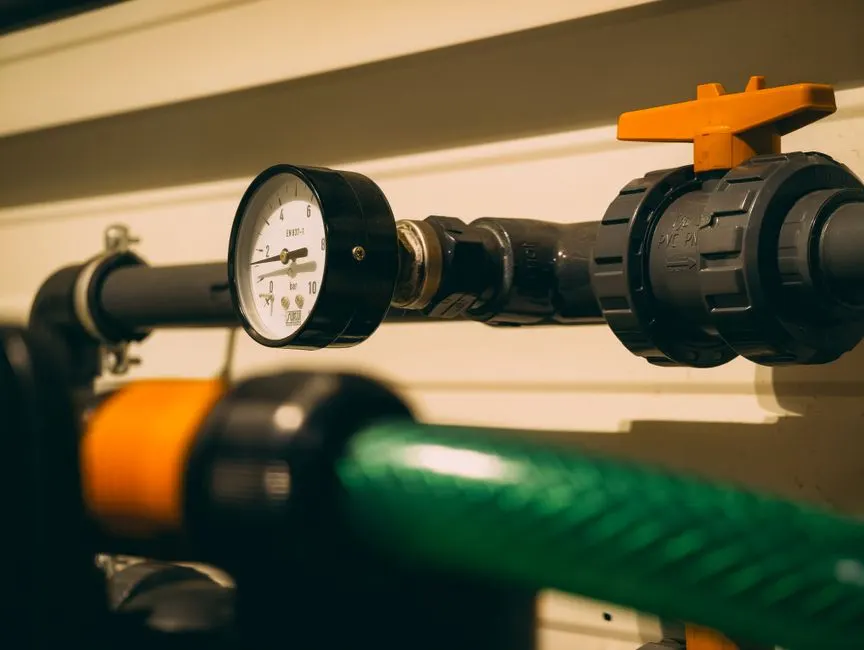
Preventing frozen pipes in Washington comes down to four things: keep every pipe above 32°F, drain what you can't heat, know where your shut-off is, and act within minutes when a line stops flowing. Our Washington winter checklist below walks through each step in the order we do them on service calls, from the first hard freeze in November through the last thaw in March. If you already have water on the floor, skip ahead to the section on what to do when pipes freeze.
Why Washington pipes freeze so easily
Washington pipes freeze so easily because our winters are wet and windy rather than steadily cold, so pipes sit in the 28-34°F range for weeks instead of dropping into a deep, dry freeze. That slow soak is what bursts copper and PEX. Water expands about 9% when it turns to ice, and a line that freezes, thaws, and refreezes three or four times in a month is far more likely to split than one that freezes once.
Our housing stock makes it worse. Plenty of homes across Seattle water damage restoration territory were built before 1960 with pipes run through unheated crawl spaces, exterior walls, and attics. Add a wind-driven rain event off Puget Sound and you get cold air pushed straight into those cavities.
East of the Cascades it's a different problem. Homes in Spokane water damage restoration areas see single-digit nights and dry air that pulls heat out of exposed lines fast. If you want the full picture of what freeze damage looks like once it spreads, our Washington water damage restoration page covers the repair side.
Your Washington frozen pipe prevention checklist
This is the Washington frozen pipe prevention checklist we hand to homeowners before the first freeze. Work through it in one afternoon and you'll cut your risk dramatically.
- Find your main shut-off valve and tag it. In most Washington homes it's near the water meter or where the supply enters the foundation.
- Insulate every pipe in unheated space. Foam sleeves for straight runs, wrapped batts for elbows and valves.
- Seal air leaks around foundation vents, dryer vents, hose bibs, and where pipes pass through rim joists.
- Disconnect garden hoses and shut off interior valves feeding exterior spigots, then drain them.
- Set the thermostat no lower than 55°F - even when you're away for a week.
- Open cabinet doors under kitchen and bathroom sinks on exterior walls so room air reaches the pipes.
- Add a smart leak sensor near the water heater, washing machine, and any crawl space access.
- Know your crawl space. If it's vented and unheated, that's where most Washington freeze damage starts.
How to prevent frozen pipes in Washington winter: the details that matter
How to prevent frozen pipes in Washington winter is mostly about heat, airflow, and drainage - three things you control. Here's what each one looks like in practice.
Insulation that actually works
Washington pipe insulation is not one product. Foam sleeves rated for 3/4-inch pipe cost about $1.50 to $3 per linear foot at any hardware store, and they're fine for interior runs. For crawl spaces and exterior walls, you want closed-cell foam or fiberglass batts with a vapor barrier, because our humidity will soak open-cell material and turn it into a cold sponge.
Wrap the pipe, then wrap the valve. Nine out of ten frozen lines we cut open froze at a fitting, not in the middle of a straight run.
Heat tape and thermostats
Self-regulating heat cable draws 3 to 8 watts per foot and only runs when the pipe drops below about 40°F. Plug it into a GFCI outlet and never wrap it over itself. If you're in a manufactured home or a house with a long exterior run, this is the single highest-value upgrade you can make.
Drain what you won't heat
Winterize pipes in Washington by draining irrigation lines, pool equipment, swamp coolers, and any vacation-home supply lines before you leave. A 50-foot irrigation line holds roughly 1.5 gallons of water - enough to split a manifold when it freezes solid.
What to do if pipes freeze in Washington
What to do if pipes freeze in Washington: shut off the water, open the nearest faucet, and thaw the pipe slowly with a hair dryer, heat gun on low, or warm towels - never an open flame. A frozen line that hasn't split will usually thaw in 20 to 45 minutes once warm air reaches it.
Work from the faucet end back toward the frozen section. If you start in the middle you can trap pressure between two ice plugs and split the pipe yourself.
Watch for these signs that a line has already failed:
- Water staining on drywall, especially at ceiling seams below bathrooms.
- A hissing or dripping sound inside a wall when the faucet is closed.
- The water meter spinning with every fixture off.
- Sudden drop in water pressure at one fixture only.
If you see any of those, you're past prevention and into cleanup. Our team handles Washington pipe burst cleanup daily this time of year - we shut the line, extract standing water, and dry the cavity before mold sets in.
Frozen pipe repair Washington cost in 2026
Frozen pipe repair Washington cost in 2026 runs $250 to $600 for a single accessible pipe, $600 to $1,800 when the line is inside a wall or crawl space, and $3,000 to $12,000 or more when a burst line has soaked insulation, drywall, and flooring. Those are real numbers from jobs we've run this winter, not averages pulled from a national site.
The spread comes down to three things: how long the water ran, how far it traveled, and whether the cavity needs to be opened up. A pinhole leak in a basement line is a one-day job. A split copper line above a finished ceiling is a demo-and-rebuild project.
Most homeowner policies cover sudden and accidental discharge from a frozen pipe as long as the home was heated and maintained. They typically exclude damage from a home left unheated for weeks. Document everything with photos before you move a single towel.
Common mistakes we see every winter
The same four mistakes show up on almost every frozen-pipe call we run between November and March.
- Thawing with a torch. Every year someone burns a joist or melts a PEX line trying to speed things up.
- Leaving the crawl space vent open. Vented crawl spaces need to breathe in summer, not in January.
- Turning the heat off while traveling. A 55°F minimum costs a few dollars a day; a burst pipe costs thousands.
- Ignoring the first slow drain. A sluggish faucet in cold weather is often the first sign of ice forming in the line.
We also see homeowners skip the exterior spigot every year. It's a two-minute job that prevents a very expensive one.
When to call a professional
Call a professional when you can't find the frozen section, when the pipe is inside a wall or slab, when you see water where it shouldn't be, or when the line has already split. Those four situations are where DIY turns into a much bigger bill.
Water Damage Pros Washington handles the whole chain - locating the freeze, repairing or replacing the line, extracting water, and drying the structure. We find the leak, fix it, and test the line before we leave. If you're in Tacoma water damage restoration territory or anywhere else in the state, we can usually be on-site the same day.
Frequently Asked Questions
How do I prevent frozen pipes in Washington?
Insulate every pipe in unheated space, seal air leaks around foundation vents and hose bibs, disconnect exterior hoses, and keep the thermostat at 55°F or higher. Open cabinet doors under sinks on exterior walls during hard freezes. Those five steps prevent the vast majority of Washington freeze damage.
What to do if pipes freeze in Washington?
Shut off the main water valve, open the nearest faucet, and thaw the pipe slowly with a hair dryer or warm towels. Never use an open flame. If you see water staining or hear hissing inside a wall, stop and call us - that line has already split.
How much does frozen pipe repair cost in Washington?
In 2026, expect $250 to $600 for an accessible pipe, $600 to $1,800 for a line inside a wall or crawl space, and $3,000 to $12,000 or more when a burst line has soaked drywall, insulation, and flooring. The spread depends on how long water ran.
Does insurance cover frozen pipe damage in Washington?
Most policies cover sudden and accidental discharge from a frozen pipe when the home was heated and maintained. They usually exclude damage from a home left unheated for an extended period. Photograph everything before cleanup starts and file the claim the same day.
When should I winterize pipes in Washington?
Winterize pipes in Washington by mid-October, before the first hard freeze. If you missed that window, do it now - every week you wait raises the odds of a split line. Exterior spigots and irrigation lines should be drained first.
Get help with Water Damage in Washington
If a pipe has already frozen, split, or soaked your floors, we're ready to move. Call Water Damage Pros Washington at (855) 516-3683 and we'll be on-site fast to stop the water, repair the line, and dry the structure.